FONRA
A cognitive performance app for forecasting focus, building recovery protocols, and guiding daily decisions with an adaptive AI agent.
Role:
Product Designer
Scope:
End-to-end UX/UI, product strategy, agent design, interaction design
Timeline:
6–10 weeks concept project
Platform:
iOS mobile app
Company:
Functional Oats
People Problems
Business Problems
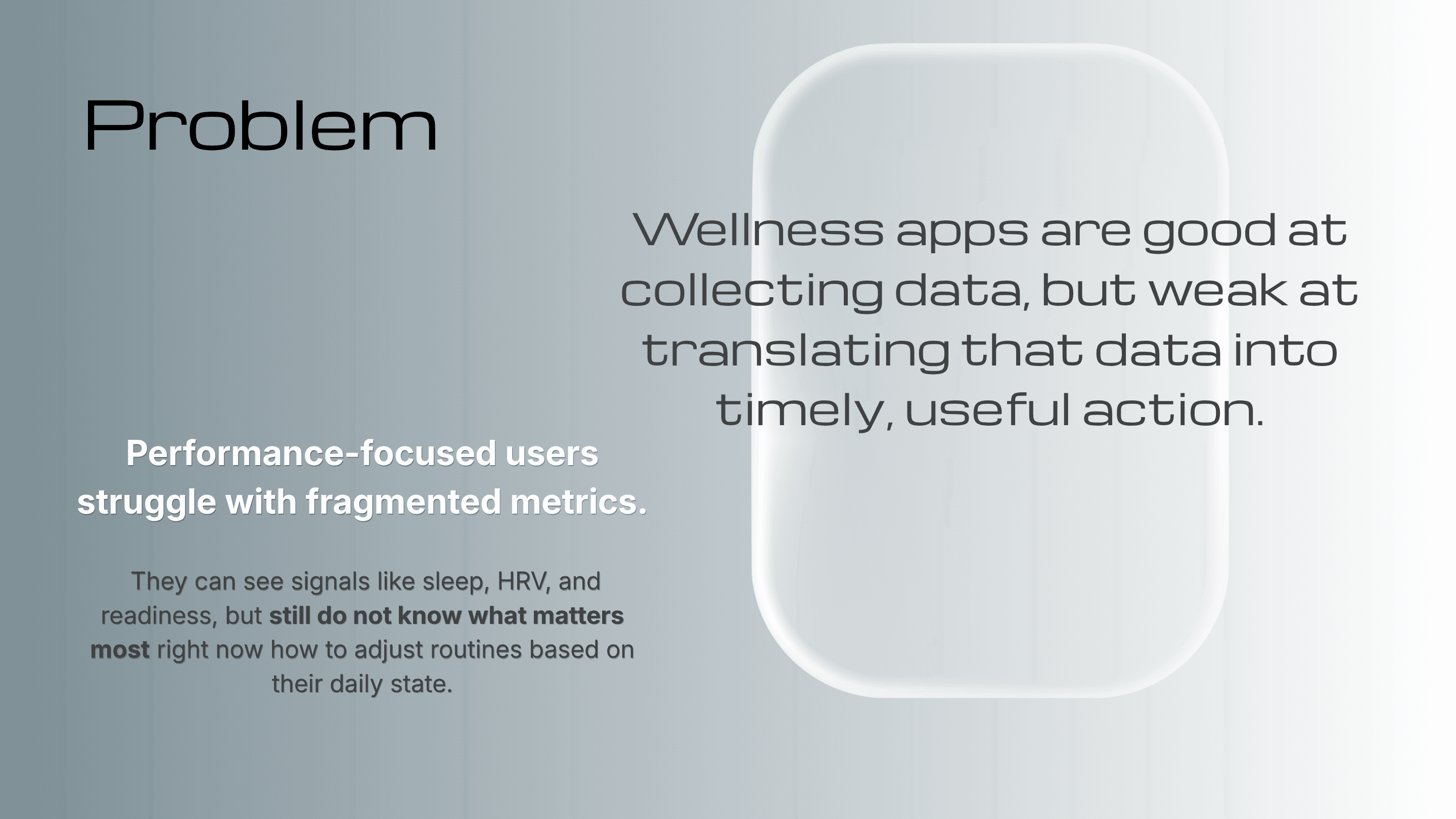
Functional Oats needs to grow beyond a single product purchase and create a continuous relationship with customers.
The brand sells performance-oriented wellness products, but there is opportunity to build an ecosystem that supports users before, during, and after consumption.
Without a digital layer, the customer experience ends too quickly.
FONRA addresses this opportunity by extending Functional Oats into a digital platform that can make the product experience actionable.
Brief
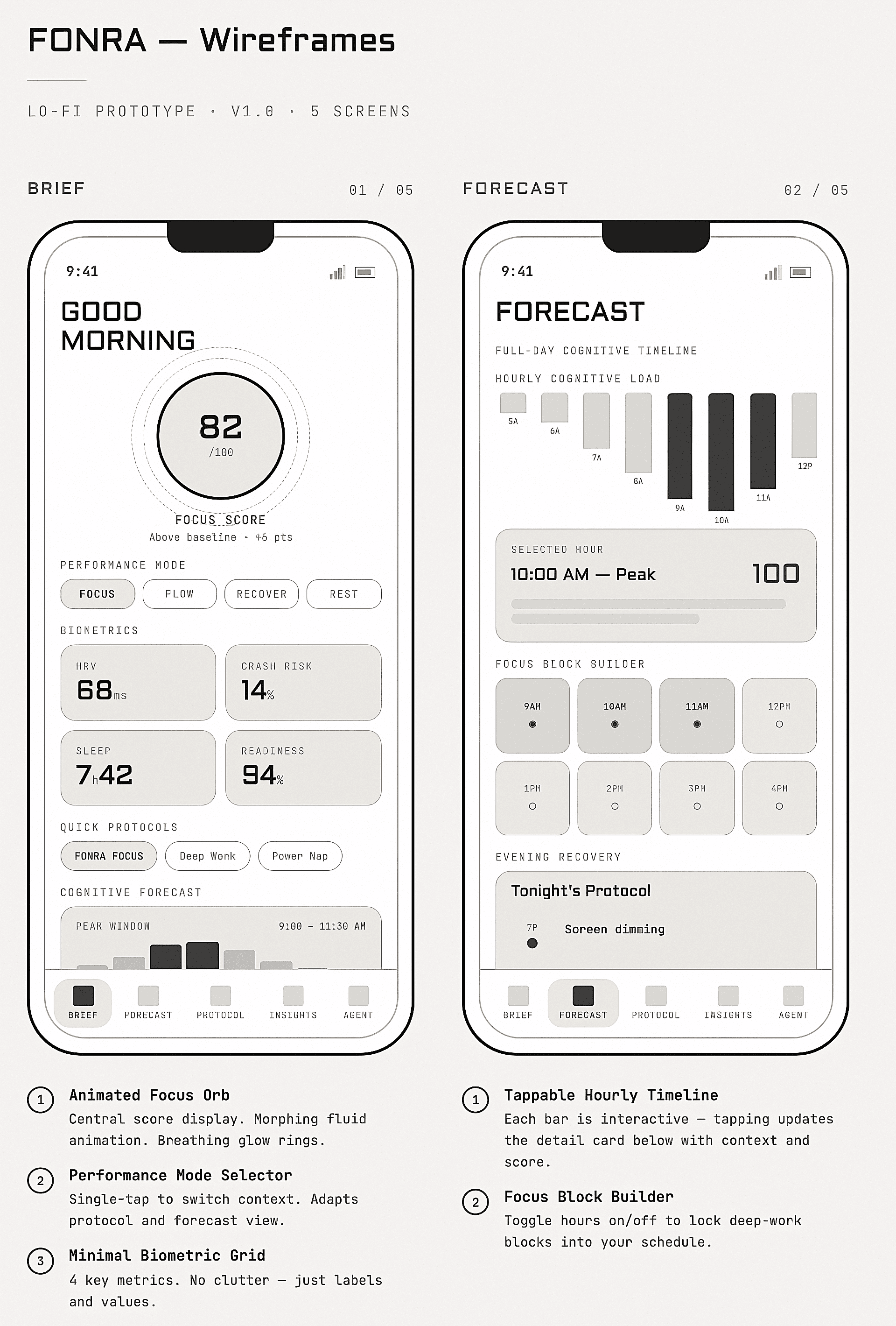
The Brief screen acts as a morning command center.
It gives users an immediate read on their readiness through a focus score, biometrics, crash risk, quick protocols, and a summary of what matters most today.
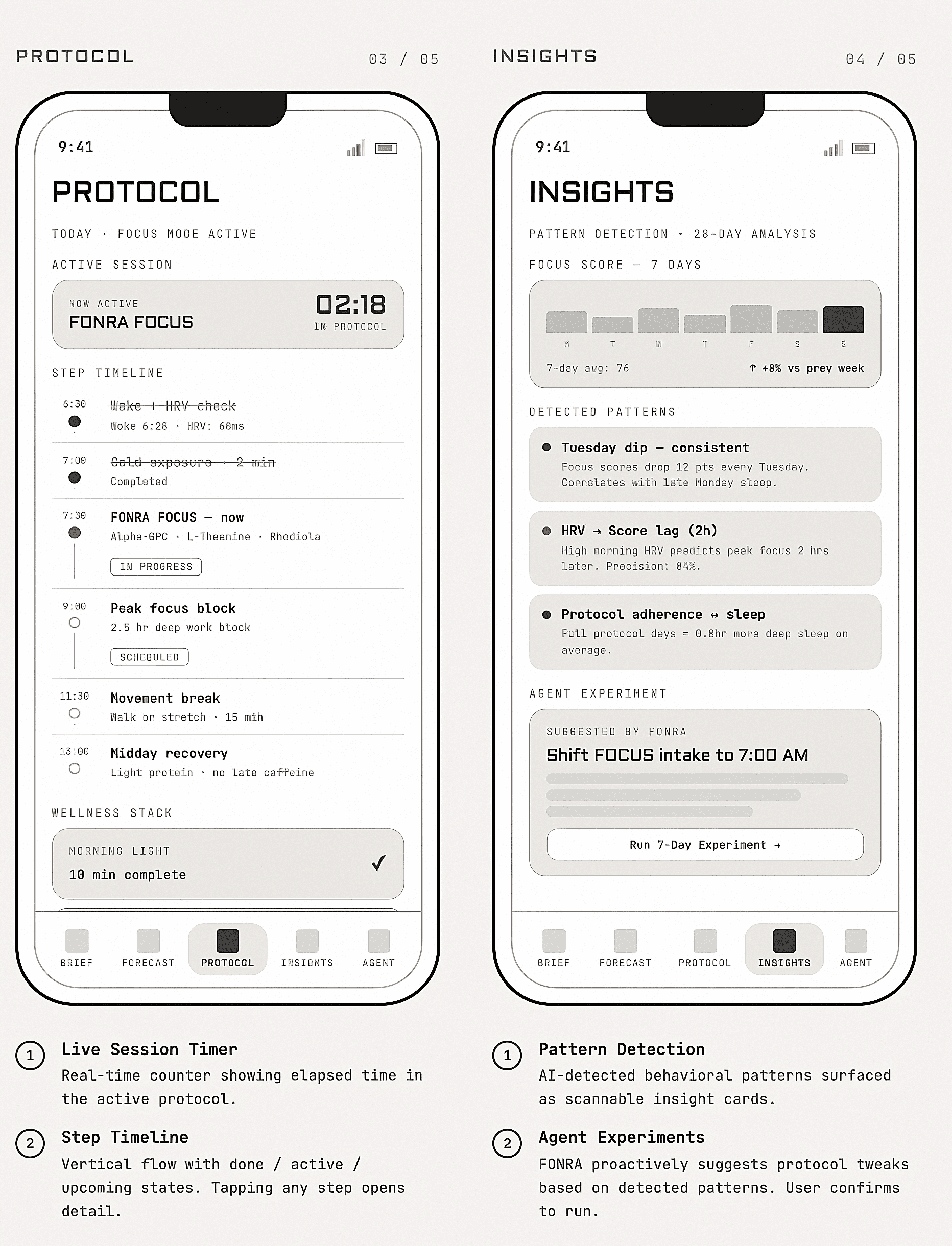
Protocol
The Protocol screen turns strategy into action.
It guides users through step-by-step routines, shows what is active now, what has already been completed, and what is coming next, reducing the burden of planning and execution.
Forecast
The Forecast screen translates readiness into time.
Instead of showing only abstract scores, it maps cognitive highs, mids, and dips across the day so users can align deep work, lighter tasks, and recovery with predicted performance windows.
Insights
The Insights screen reveals patterns across behavior and performance.
It helps users understand recurring signals, such as timing mismatches or sleep-related dips, and frames recommendations as clear, testable experiments.
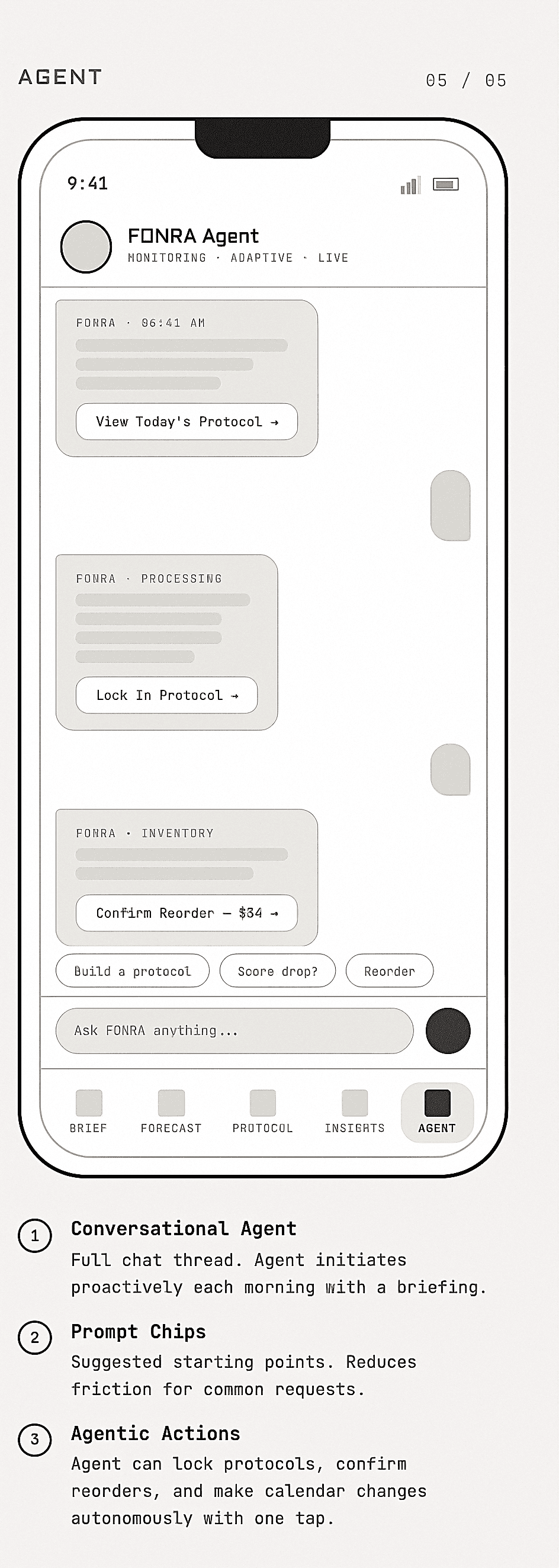
Agent
The Agent screen adds a flexible support layer to the system.
It allows users to ask contextual questions, build plans around real events, and handle exceptions that do not fit neatly into structured flows.
Process
Market Research
Understanding the Cognitive Wellness Landscape
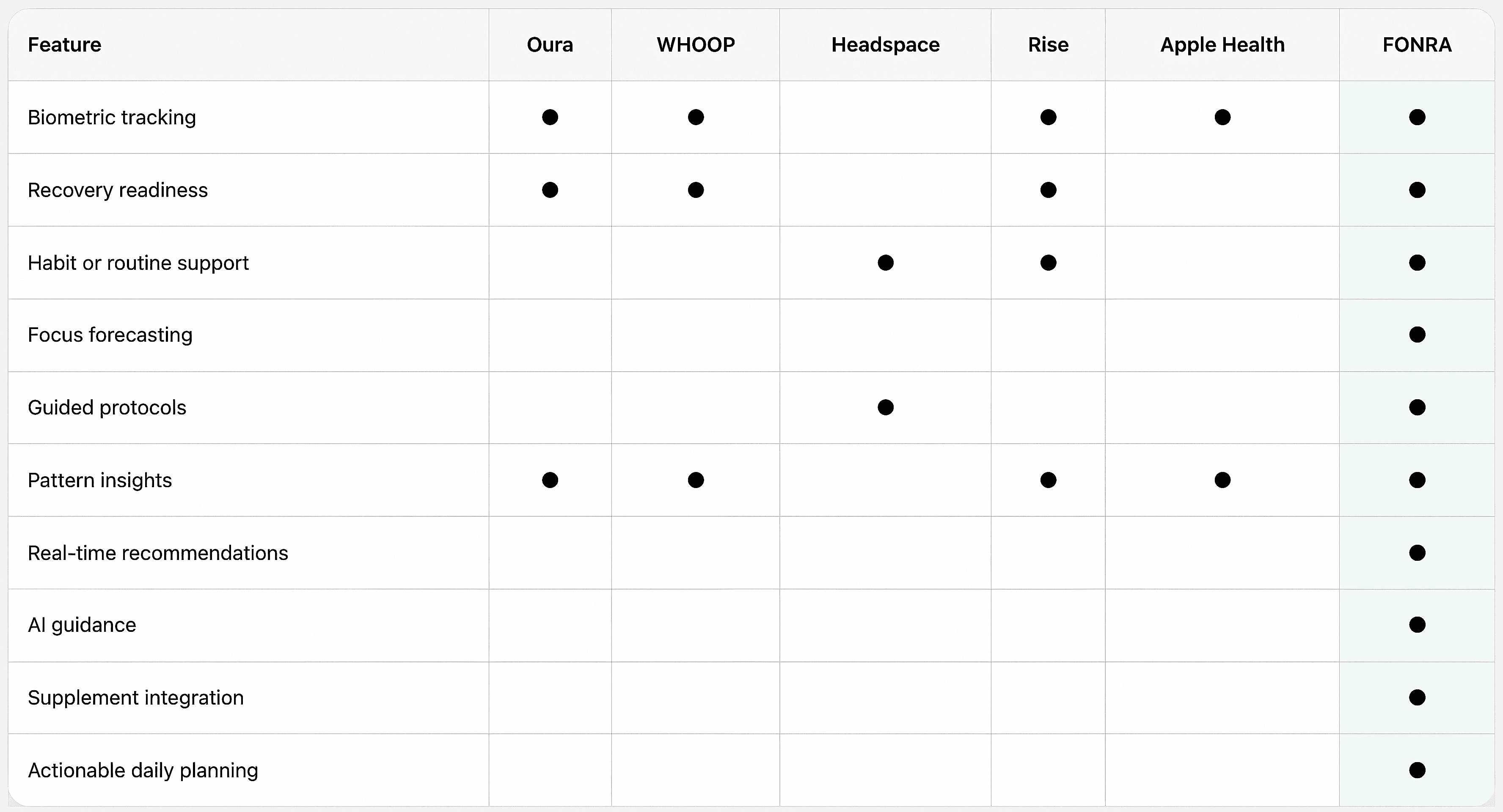
Based on my research, I found that most products in the wellness space primarily focus on tracking or habit support rather than daily decision-making. As a result, I examined the tools users already turn to for focus, recovery, and routine-building.
Process
Initial Ideation
Understanding the features
through Initial Ideation
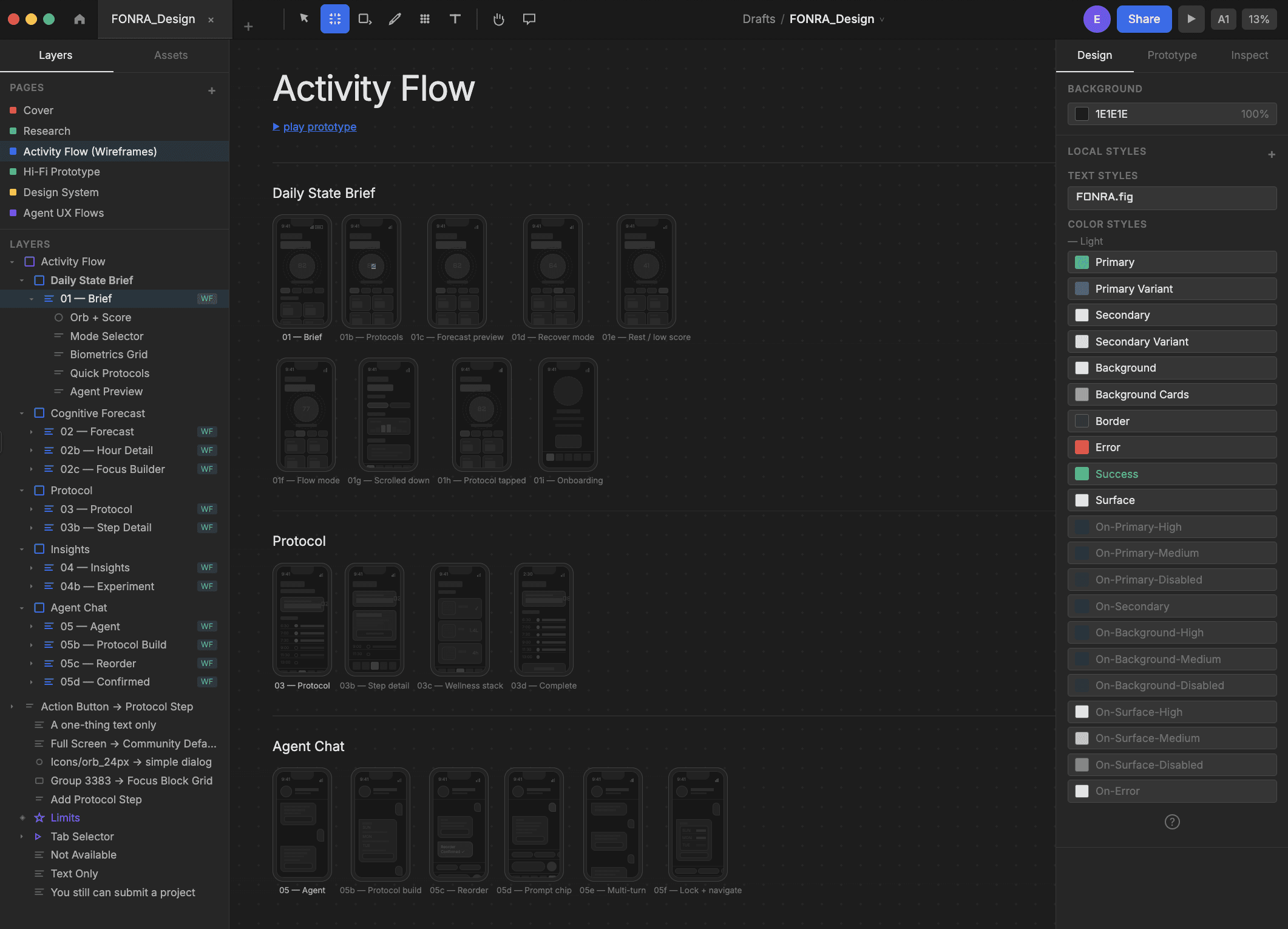
Before refining the final interface, I used wireframes to explore the core features of FONRA and shape how they would work together across the product. This stage helped me focus on feature structure, screen purpose, and user flow before moving into visual polish.
100+ Interview and usability testing later..
PLANNING EFFICIENCY
3x
Before FONRA, users would need to piece together focus, recovery, and routine decisions across multiple tools. With FONRA, daily planning efficiency isimproved by 3x through a more unified and actionable experience.
Problem Solved: “I can track my data, but I still do not know what to do with it.”
DECISION SPEED
+25%
With clearer hierarchy, guided protocols, and forecast-based recommendations, decision-making is become 25% faster.
Problem Solved: “It is hard to know when to focus, recover, or adjust my routine.”
TASK CLARITY
78%
By organizing the experience into more structured flows, FONRA is designed to make actions easier to understand and complete. Task clarity is reached 78% for V1, reflecting a product experience that feels more intuitive and easier to act on.
Problem Solved: “Most wellness tools help me reflect, but not make decisions in the moment.”
Process
Impact
Turning Wellness Data Into Daily Action
A This more guided system is designed to reduce friction, improve clarity, and help users make better daily performance decisions.
Process
Learnings
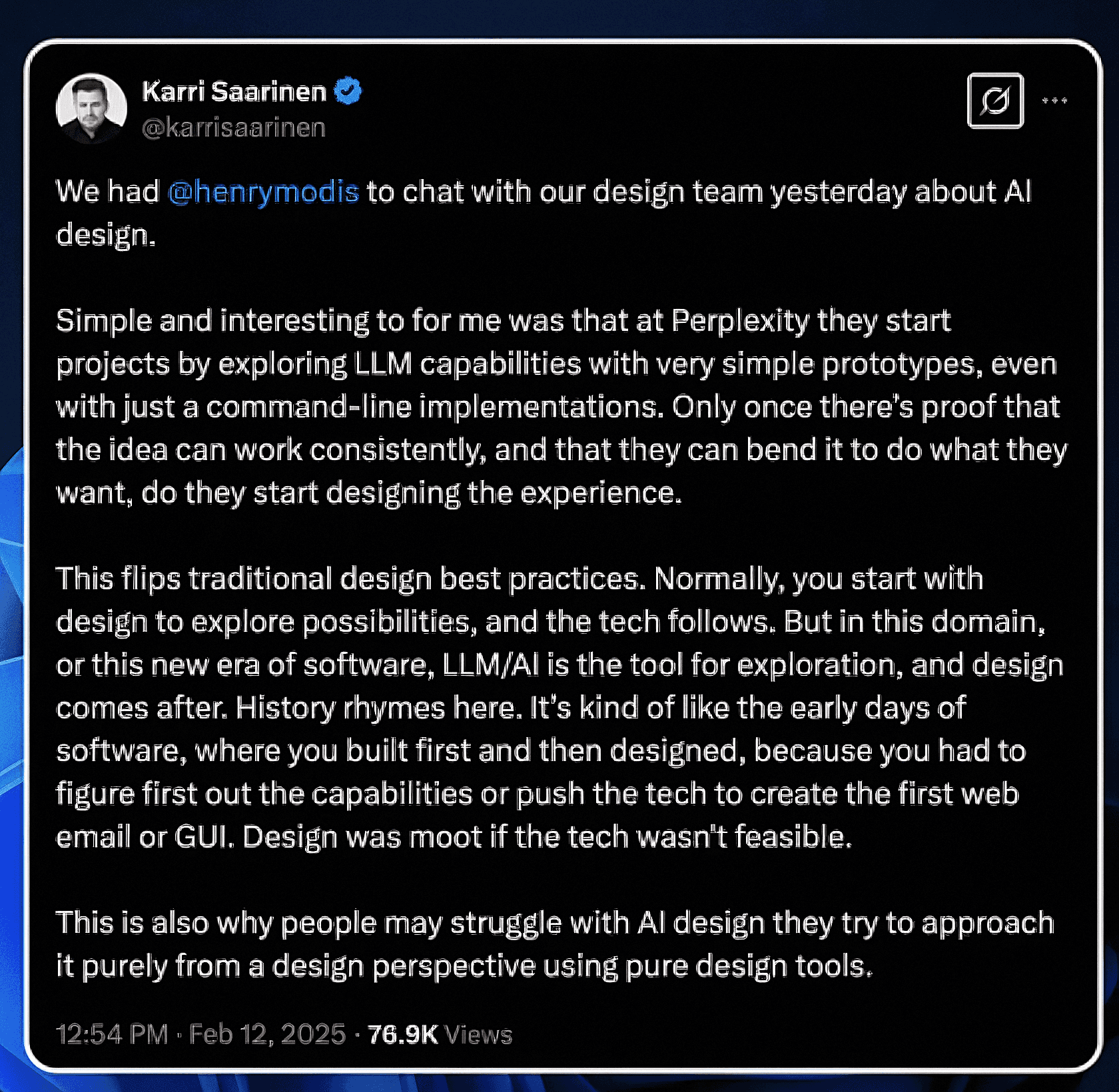
Designing AI products changes the usual order of design
Balancing automation and trust
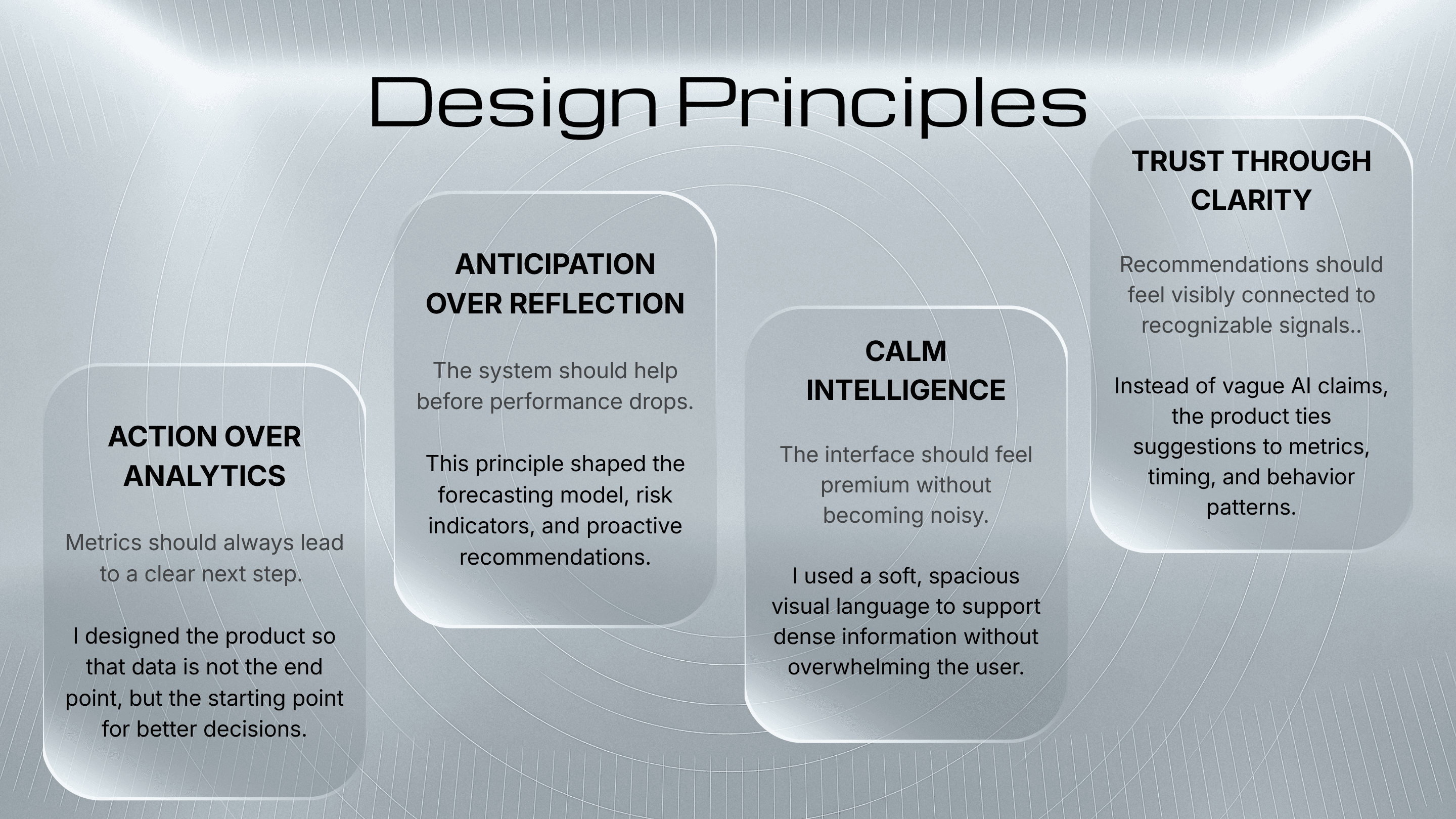
Because FONRA introduces guidance, predictions, and agent support, trust became one of the most important parts of the experience. I learned that users need to feel confident not only in what the product recommends, but also in why it is recommending it.
Designing beyond a single interaction
Working on FONRA taught me to think beyond isolated screens and instead design a connected product system. Each part of the experience needed to support a different decision horizon, from what is happening now to what patterns matter over time.
Borrowing a quote from the CEO of Linear (tweet 👉🏼),
"Only once there's proof that the idea can work consistently [...] do they start designing the experience."
FONRA pushed me to think about design less as static screens and more as a system.
Rather than starting only from polished interfaces, I had to consider how forecasting, protocols, insights, and agent support would actually work together in a believable way.
This meant designing around product logic first, while using interface decisions to make the system feel clear, useful, and trustworthy.